Sunday, 22 November 2026

Keryn Headlines

Daily No. 6 · Application and AI security for teams that build with AI

Updated 14:39 UTC

Keryn Headlines front page

Lead story

Attackers' AI Agents Found a Zero-Day in Medical-Imaging Software and Gained Root Access

Attackers' AI Agents Found a Zero-Day in Medical-Imaging Software and Gained Root Access

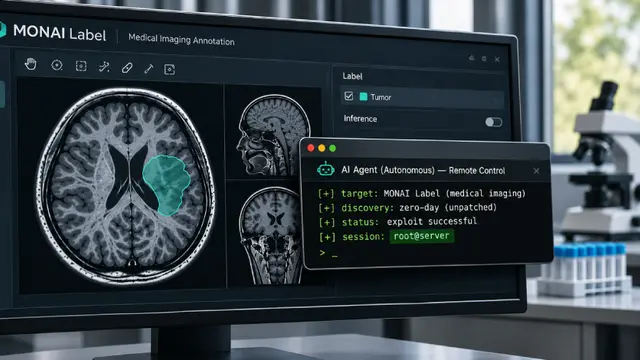
Suspected China-linked hackers used autonomous AI agents to find a previously unknown flaw in MONAI Label, an open-source medical imaging server, and gain root access to a university server, Amazon Threat Intelligence said this week. The flaw allows an attacker with no account…

Why it matters: If you run MONAI Label 0.8.5 or earlier in the default setup, an unauthenticated attacker can write files outside the storage folder; Amazon Threat Intelligence says suspected China-linked hackers used AI agents to find it and gain root on a university server. Attribution is suspected; no fixed version is named.

The Hacker News · Incident · · AI Security

From the editor · Daily, Sunday 22 November 2026If you run the MONAI Label imaging server: Amazon Threat Intelligence said suspected China-linked hackers used autonomous AI agents to find a previously unknown flaw in it and gain root access to a university server.Read the note

If you run the MONAI Label imaging server: Amazon Threat Intelligence said suspected China-linked hackers used autonomous AI agents to find a previously unknown flaw in it and gain root access to a university server 1. No source states a fixed build yet 1. Our advice: keep it off untrusted networks until an advisory appears.

If your applications use GPGME: the GnuPG project warned that a malicious OpenPGP key with an unusually long user ID can trigger a critical memory bug that attackers could use to steal application data 2. The project has released something, but the excerpt ends before naming it 2. Our advice: check GnuPG's announcement and treat inbound keys as untrusted meanwhile.

If you run clusters on Rackspace Spot: Rackspace warned that hackers used compromised credentials to deploy unauthorized workloads and access Kubernetes secrets in customer clusters 3. The report does not say how the attackers got the credentials 3. Our advice: rotate those secrets and review unfamiliar workloads.

AI-drafted. Not reviewed by a human editor: it passed automated checks only. Published by Keryn. Corrections: keryn@keryn.dev · Full edition and how it was checked

Top stories

Researchers Demonstrate Ghostscript Sandbox-Escape RCE via Crafted File Uploads in Popular Apps

Researchers Demonstrate Ghostscript Sandbox-Escape RCE via Crafted File Uploads in Popular Apps

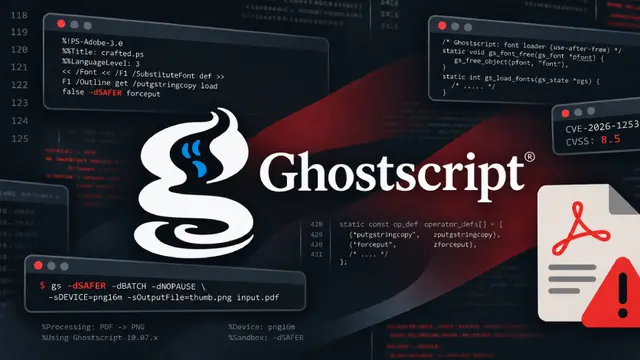
A now-patched flaw in Ghostscript allows a crafted file to escape the program's security sandbox and run commands on the server that processes it. Ghostscript is the interpreter that many Linux servers use to convert uploaded PDFs, PostScript files, and images into other…

Why it matters: If your Linux servers process uploaded PDFs, PostScript files or images, Ghostscript may run behind the scenes even when your app never calls it directly. Researchers at pwn.ai showed a crafted file can escape its sandbox and run commands; the flaw is patched, so check your Ghostscript version. No in-the-wild use is stated.

The Hacker News · Research · · Remediation

GnuPG Warns Critical GPGME Flaw Could Expose App Data via Malicious OpenPGP Keys

GnuPG Warns Critical GPGME Flaw Could Expose App Data via Malicious OpenPGP Keys

A malicious OpenPGP key with an unusually long user ID can trigger a critical memory bug in GPGME, the standard library that programs use to work with GnuPG. The GnuPG project warned yesterday that the flaw could be used to steal data from affected applications and has released…

Why it matters: If your software uses GPGME before version 2.3.0 to handle OpenPGP keys, a malicious key with an unusually long user ID can trigger a critical memory bug (CVE-2026-129975) that could expose application data. Upgrade to fixed versions; the text does not mention exploitation in the wild.

The Hacker News · Advisory · · Remediation

How Cloudflare WAF helps protect against phpAfterShell and other critical PHP flaws

How Cloudflare WAF helps protect against phpAfterShell and other critical PHP flaws

phpAfterShell is a critical flaw in PHP's default session handler that can lead to code execution. Cloudflare WAF blocks it for all customers, including Free plans, and adds new rules for other PHP flaws fixed in the same release.

Why it matters: If you run PHP with the default file-based session handler, phpAfterShell (CVE-2026-126714, CVSS 4.0 9.2) can lead to remote code execution; fixes shipped in 8.2.36, 8.3.37, 8.4.28, 8.5.13 and 8.6.0, which also fix 16 other flaws, six critical. Cloudflare WAF rules are a stopgap, not a patch.

Cloudflare: Security · Advisory · · Remediation

Section fronts

SCA

Ruby2Shell: critical Ruby RCE, affected versions and how to fix it (GHSA-34m4-m9fh-gqp5)

Ruby2Shell: critical Ruby RCE, affected versions and how to fix it (GHSA-34m4-m9fh-gqp5)

Aikido Security · Advisory · · 4 sources · Remediation, SCA

Builds (CVE-2026-132825, from vendor records): fixed in Red Hat Hardened Images ruby4.0-0:4.0.10-42.hum1@aarch64; affected, no fix stated: Red Hat 3scale Api Management Platform 2, Red Hat Enterprise Linux 10, Red Hat Enterprise Linux 6, Red Hat Enterprise Linux 7, Red Hat Enterprise Linux 8, Red Hat Enterprise Linux 9, Red Hat Openshift Container Platform 4.
DistributionStatusSource
Red Hat Hardened Imagesfixed in ruby4.0-0:4.0.10-42.hum1@aarch64access.redhat.com
Red Hat 3scale Api Management Platform 2affected, no fixed build statedaccess.redhat.com
Red Hat Enterprise Linux 10affected, no fixed build statedaccess.redhat.com
Red Hat Enterprise Linux 6affected, no fixed build statedaccess.redhat.com
Red Hat Enterprise Linux 7affected, no fixed build statedaccess.redhat.com
Red Hat Enterprise Linux 8affected, no fixed build statedaccess.redhat.com
Red Hat Enterprise Linux 9affected, no fixed build statedaccess.redhat.com
Red Hat Openshift Container Platform 4affected, no fixed build statedaccess.redhat.com

From vendors' published records, read 2026-11-22 10:37 UTC. A build is named only where a vendor states it.

DAST

php2shell: Assessing Elastic detection coverage relevant to CVE-2026-109618 and CVE-2026-109619

php2shell: Assessing Elastic detection coverage relevant to CVE-2026-109618 and CVE-2026-109619

Elastic · Advisory · · 15 sources · DAST, Remediation

Builds (CVE-2026-109618, from vendor records): fixed in RHEL 10.0 AppStream php-0:8.3.19-1.el10_0.2, RHEL 10.2 AppStream php-0:8.3.36-1.el10_2, RHEL 10.3 AppStream php8.4-0:8.4.27-2.el10_3.1, RHEL 8.10 AppStream apcu-panel-0:5.1.18-1.module+el8.10.0+22485+a3539972.noarch::php:7.4, RHEL 8.4 AppStream apcu-panel-0:5.1.18-1.module+el8.3.0+6678+b09f589e.noarch::php:7.4, RHEL 8.6 AppStream apcu-panel-0:5.1.18-1.module+el8.3.0+6678+b09f589e.noarch::php:7.4, RHEL 8.8 AppStream apcu-panel-0:5.1.18-1.module+el8.3.0+6678+b09f589e.noarch::php:7.4, RHEL 9.2 AppStream php-0:8.0.30-1.el9_2.2.
DistributionStatusSource
RHEL 10.0 AppStreamfixed in php-0:8.3.19-1.el10_0.2access.redhat.com
RHEL 10.2 AppStreamfixed in php-0:8.3.36-1.el10_2access.redhat.com
RHEL 10.3 AppStreamfixed in php8.4-0:8.4.27-2.el10_3.1access.redhat.com
RHEL 8.10 AppStreamfixed in apcu-panel-0:5.1.18-1.module+el8.10.0+22485+a3539972.noarch::php:7.4access.redhat.com
RHEL 8.4 AppStreamfixed in apcu-panel-0:5.1.18-1.module+el8.3.0+6678+b09f589e.noarch::php:7.4access.redhat.com
RHEL 8.6 AppStreamfixed in apcu-panel-0:5.1.18-1.module+el8.3.0+6678+b09f589e.noarch::php:7.4access.redhat.com
RHEL 8.8 AppStreamfixed in apcu-panel-0:5.1.18-1.module+el8.3.0+6678+b09f589e.noarch::php:7.4access.redhat.com
RHEL 9.2 AppStreamfixed in php-0:8.0.30-1.el9_2.2access.redhat.com

From vendors' published records, read 2026-11-22 14:37 UTC. A build is named only where a vendor states it.

Agentic SDLC

Remediation

Java4Shell: Remote Code Execution in OpenJDK (CVE-2026-114938)

Java4Shell: Remote Code Execution in OpenJDK (CVE-2026-114938)

Datadog · Advisory · · 16 sources · Remediation

Builds (CVE-2026-114938, from vendor records): fixed in Amazon Corretto 27 27.0.1.1.4, Red Hat Build of OpenJDK 17.0.21.1 , Red Hat Build of OpenJDK 21.0.13.1 , Red Hat Build of OpenJDK 25.0.5.1 , Temurin Build of OpenJDK 25.0.5.1 ; affected, no fix stated: Red Hat build of Keycloak.
DistributionStatusSource
Amazon Corretto 27fixed in 27.0.1.1.4github.com
Red Hat Build of OpenJDK 17.0.21.1fixed in access.redhat.com
Red Hat Build of OpenJDK 21.0.13.1fixed in access.redhat.com
Red Hat Build of OpenJDK 25.0.5.1fixed in access.redhat.com
Temurin Build of OpenJDK 25.0.5.1fixed in access.redhat.com
Red Hat build of Keycloakaffected, no fixed build statedaccess.redhat.com
Oracle Java SEadvisory published, builds in the advisoryoracle.com
Red Hat build of OpenJDK 1.8not affectedaccess.redhat.com
Red Hat build of OpenJDK 11 ELSnot affectedaccess.redhat.com
Red Hat build of Quarkus Native Buildernot affectedaccess.redhat.com

From vendors' published records, read 2026-11-22 14:07 UTC. A build is named only where a vendor states it.

Unauthenticated Remote Code Execution in NGINX: CVE-2026-123633 and CVE-2026-123007

Unauthenticated Remote Code Execution in NGINX: CVE-2026-123633 and CVE-2026-123007

Wiz · Advisory · · 9 sources · Remediation

Builds (CVE-2026-123007, from vendor records): fixed in RHEL 10.0 AppStream nginx-2:1.26.3-1.el10_0.10, RHEL 10.2 AppStream nginx-2:1.26.3-6.el10_2.9, RHEL 10.3 AppStream nginx-2:1.26.3-16.el10_3.3, RHEL 8.10 AppStream nginx-1:1.24.0-3.module+el8.10.0+25364+53b7037a.9.aarch64::nginx:1.24, RHEL 9.2 AppStream nginx-1:1.20.1-14.el9_2.8, RHEL 9.4 AppStream nginx-1:1.20.1-16.el9_4.8, RHEL 9.6 AppStream nginx-1:1.24.0-4.module+el9.6.0+25376+6e355f8f.4.aarch64::nginx:1.24, RHEL 9.8 AppStream nginx-1:1.24.0-7.module+el9.8.0+25374+40bd8b35.7.aarch64::nginx:1.24.
DistributionStatusSource
RHEL 10.0 AppStreamfixed in nginx-2:1.26.3-1.el10_0.10access.redhat.com
RHEL 10.2 AppStreamfixed in nginx-2:1.26.3-6.el10_2.9access.redhat.com
RHEL 10.3 AppStreamfixed in nginx-2:1.26.3-16.el10_3.3access.redhat.com
RHEL 8.10 AppStreamfixed in nginx-1:1.24.0-3.module+el8.10.0+25364+53b7037a.9.aarch64::nginx:1.24access.redhat.com
RHEL 9.2 AppStreamfixed in nginx-1:1.20.1-14.el9_2.8access.redhat.com
RHEL 9.4 AppStreamfixed in nginx-1:1.20.1-16.el9_4.8access.redhat.com
RHEL 9.6 AppStreamfixed in nginx-1:1.24.0-4.module+el9.6.0+25376+6e355f8f.4.aarch64::nginx:1.24access.redhat.com
RHEL 9.8 AppStreamfixed in nginx-1:1.24.0-7.module+el9.8.0+25374+40bd8b35.7.aarch64::nginx:1.24access.redhat.com

From vendors' published records, read 2026-11-22 09:37 UTC. A build is named only where a vendor states it.

Trust

Models

AI Security

Advisory bulletins, last 24 hours

All advisories

Research this week

Editions

All editions and feeds · Latest, as it lands

Follow Keryn Headlines

Security news for teams building with AI. Choose an edition:

  • Daily: Every morning, 06:00 UTC. A short operational briefing: the few developments that matter, who is affected and what to watch. RSS feed
  • Weekly: Tuesdays, about 07:00 US Eastern. The week in order of importance. An editor’s essay accompanies the edition when it passes editorial checks. RSS feed
  • Monthly: The first Tuesday of the month, about 07:00 US Eastern. The month in review. A long read accompanies the edition when it passes editorial checks. RSS feed

Email is not open yet

Use RSS now: it works in any feed reader and needs no sign-up. Add the feed for the edition you want.

Daily feedWeekly feedMonthly feed All editions

When email opens, this box will let you choose editions and confirm by email. Nothing is collected before then.