SAST
Static analysis: finding flaws in source code before it runs.
- 0 last 24h
- 9 last 7 days
- 62 in view
- RSS
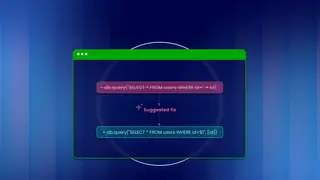
AI SAST remediation: fixing vulnerabilities in first-party code
Learn how AI SAST remediation fixes vulnerabilities in first-party code with context-aware fixes, plus how to verify them and measure MTTR and fix rate.
Why tagged?
- SAST from the title:
AI SAST remediation: fixing vul
- Remediation from the title:
AI SAST remediation: fixing vulnerabilit
- SAST from the title:
Why the Harness Matters: Early Lessons From the Evo Code Scanning Agent Preview
In early tests, Evo Code Scanning Agent’s security harness found more known vulnerabilities than Claude Security and Codex Security at the same compute budget, with lower precision. See what the results reveal about the role of the harness in AI code scanning.
Why tagged?
- SAST from the title:
ly Lessons From the Evo Code Scanning Agent Preview
- Agentic SDLC from the excerpt:
han Claude Security and Codex Security at the same co
- SAST from the title:
Reachability analysis for SAST findings: separating real paths from pattern matches
Reachability analysis for SAST checks whether untrusted input can reach a flagged sink along a feasible path. See how it works, how it differs from SCA, and how to use it in triage.
Why tagged?
- SAST from the title:
achability analysis for SAST findings: separating re
- SAST from the title:
How to run AI SAST in CI/CD and on pull requests
Run AI SAST where code gets reviewed. Scan placement, diff-aware PR scans, PR comments, merge policies, CI secrets, and metrics, with an example pipeline.
Why tagged?
- SAST from the title:
How to run AI SAST in CI/CD and on pull re
- SAST from the title:
AI SAST best practices: 10 ways to run AI-powered static analysis well
Ten practical AI SAST best practices: where to scan, how to trust findings, how to guard coding agents, and which metrics prove it's working.
Why tagged?
- SAST from the title:
AI SAST best practices: 10 ways
- SAST from the title:
Characterizing GitHub Security Actions Alerts For Web Application Tutorials
The high frequency of cybersecurity incidents involving web applications highlights the importance of secure software development practices. Static Application Security Testing (SAST) tools help identify potential vulnerabilities in source code without executing the code.…
Why tagged?
- SAST from the excerpt:
ation Security Testing (SAST) tools help identify po
- SAST from the excerpt:
Detecting business logic flaws and IDOR with AI SAST
IDOR and broken access control look like valid code, so rule-based SAST misses them. See vulnerable and fixed examples and how AI SAST finds them.
Why tagged?
- SAST from the title:
flaws and IDOR with AI SAST
- SAST from the title:
The four places AI runs in Mend SAST
AI in SAST: Four jobs AI does in Mend SAST and what each gives developers.
Why tagged?
- SAST from the title:
places AI runs in Mend SAST
- SAST from the title:
Taint Analysis via Heap-Aware Propagation
Taint analysis for C depends on how precisely the analysis tracks tainted values as they flow through memory objects. Without field sensitivity, a tainted object field can spuriously taint an entire object, producing significant false alarms. In this paper, we present a…
Why tagged?
- SAST from the title:
Taint Analysis via Heap-Aware Propagat
- SAST from the title:
Preserve the Vulnerability, Break the Alert: Testing the Robustness of CodeQL Taint Tracking with Natural Rewrites
Static application security testing (SAST) tools such as CodeQL serve as security gates in continuous integration and code review, and a gate is also read in reverse. When a previously reported alert disappears after a change, developers and the tools around them often take the…
Why tagged?
- SAST from the title:
sting the Robustness of CodeQL Taint Tracking with Nat
- SAST from the title:
AI SAST vs traditional SAST: what changes when static analysis can reason
AI SAST vs traditional SAST, compared: how reasoning changes detection of authorization flaws, false positives, triage, fixes, speed, and cost
Why tagged?
- SAST from the title:
AI SAST vs traditional SAST: wh
- Remediation from the excerpt:
flaws, false positives, triage, fixes, speed, and cost
- SAST from the title:
How AI SAST works: detection, triage, and remediation agents
See how AI SAST works step by step: what the detection, triage, and remediation agents do, the context each one uses, and how they hand off.
Why tagged?
- SAST from the title:
How AI SAST works: detection, triag
- SAST from the title:
Your model, our analysis: BYOK for Endor Labs AI SAST
Your model, our analysis: BYOK for Endor Labs AI SAST
Why tagged?
- SAST from the title:
BYOK for Endor Labs AI SAST
- SAST from the title:
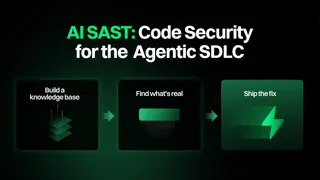
AI SAST: Code Security for the Agentic SDLC
How Endor Labs AI SAST combines program analysis, agentic reasoning, and deterministic engineering to find and fix the flaws that matter in AI-written code.
Why tagged?
- SAST from the title:
AI SAST: Code Security for the
- SAST from the title:
Why Endor Labs AI SAST for C finds what other tools miss
Endor Labs AI SAST now fully supports C. Scans run in the IDE and on the PR, catching vulnerabilities before code ships, for teams writing C faster than release-gated review can keep up.
Why tagged?
- SAST from the title:
Why Endor Labs AI SAST for C finds what other
- SAST from the title:
How AI SAST Traced Data Flows to Uncover Six OpenClaw Vulnerabilities
We discovered six vulnerabilities in OpenClaw using Endor Labs’ AI SAST data flow analysis and validated working exploits.
Why tagged?
- SAST from the title:
How AI SAST Traced Data Flows to Un
- SAST from the title:
What is AI SAST? A guide to AI-powered static application security testing
AI SAST combines program analysis, dataflow tracing, and LLM reasoning to find logic flaws rule-based SAST misses. Learn how it works and how to evaluate tools.
Why tagged?
- SAST from the title:
What is AI SAST? A guide to AI-powered
- SAST from the title:
AI code review vs SAST: what each catches and how to use both
AI code review vs SAST: how detection, bug coverage, determinism, false positives, and cost differ, and why combining them catches more real risk.
Why tagged?
- SAST from the title:
AI code review vs SAST: what each catches and
- Agentic SDLC from the title:
AI code review vs SAST: what each catc
- SAST from the title:
Endor Labs’ AI SAST Finds Zero Day Memory-Amplification DoS in Anthropic’s buffa library
We identified an unbounded-allocation data flow in buffa's protobuf decoder that I developed into a ~22x memory-amplification denial of service for CVE-2026-55407
Why tagged?
- SAST from the title:
Endor Labs’ AI SAST Finds Zero Day Memory-A
- SAST from the title:
Benchmarking Endor Labs AI SAST: 2.6x more real vulnerabilities found than frontier models
Endor Labs AI SAST found 192 real vulnerabilities and the most vulnerabilities no other tool found. Coverage is why. Here's what each tool actually caught.
Why tagged?
- SAST from the title:
chmarking Endor Labs AI SAST: 2.6x more real vulnera
- SAST from the title:
How Endor Labs AI SAST Learns What Matters to Your Organization
How Endor Labs AI SAST Learns What Matters to Your Organization
Why tagged?
- SAST from the title:
How Endor Labs AI SAST Learns What Matters to
- SAST from the title:
AI SAST Finding: Path Traversal in OpenClaw via LLM Guardrail Bypass
How Endor Labs' AI SAST engine identified a path traversal vulnerability in OpenClaw's apply_patch tool tracked as (GHSA-r5fq-947m-xm57)
Why tagged?
- SAST from the title:
AI SAST Finding: Path Traversal
- SAST from the title:
SAST for AI-Generated Code: What Static Analysis Catches and Misses
Learn how sast for ai generated code catches logic flaws, cuts false positives, and exposes what traditional static analysis still misses
Why tagged?
- SAST from the title:
SAST for AI-Generated Code:
- SAST from the title:
What is AI code review? How it works, what it checks, and where agentic review fits
AI code review uses AI to review pull requests for bugs, quality, and security. Learn how it works, how it differs from SAST and linters, and what agentic review adds.
Why tagged?
- SAST from the excerpt:
ks, how it differs from SAST and linters, and what a
- Agentic SDLC from the title:
What is AI code review? How it works, what it
- SAST from the excerpt:
9 Best SAST Tools in 2027: Accuracy, Speed, and Noise Compared
Compare the best SAST tools of 2027 by accuracy, language coverage, and false-positive noise. See how the top static analysis tools rank.
Why tagged?
- SAST from the title:
9 Best SAST Tools in 2027: Accuracy
- SAST from the title:
Best AI SAST tools in 2027: 9 options ranked and compared
Nine AI SAST tools ranked for 2027, from Endor Labs to Checkmarx, Semgrep, and more, compared on detection, triage, fixes, and the context their AI reasons over.
Why tagged?
- SAST from the title:
Best AI SAST tools in 2027: 9 option
- SAST from the title:
10 Snyk Alternatives for Engineering & Security Teams (2027)
Compare 10 Snyk alternatives for SCA, SAST and container scanning, with reachability, AI capabilities and fit by team size, build system and compliance needs.
Why tagged?
- SAST from the excerpt:
k alternatives for SCA, SAST and container scanning,
- SAST from the excerpt:
CyberBinGym: Can AI Agents Turn Binary Patches into Real Exploits?
Security fixes usually reach users as compiled updates, but deployment delays leave unpatched systems exposed. During this window, comparing patched and unpatched binaries can reveal how to exploit a vulnerability, turning a defensive update into actionable information for…
Why tagged?
- SAST from the excerpt:
ation, and must combine static and dynamic analysis to recover and exploit
- Remediation from the title:
n AI Agents Turn Binary Patches into Real Exploits?
- AI Security from the title:
CyberBinGym: Can AI Agents Turn Binary Patches into Real Exploits?
- SAST from the excerpt:
I Don't Care How You Hide It, I Care What You Do: Runtime Detection of Malicious ML Models
Pre-trained machine learning (ML) models shared through public platforms can be weaponized to execute malicious payloads during loading or inference. Existing scanners prove inadequate for detecting malicious models as they rely on static analysis and function denylists,…
Why tagged?
- SAST from the excerpt:
models as they rely on static analysis and function denylists,
- SAST from the excerpt:
When File Ingestion Misleads Language Models: Measuring and Mitigating Divergences in Office Documents
Office documents are now routinely uploaded to large language models (LLMs) for processing. However, an LLM does not always see what a human sees, because it typically reads the text that an extractor produces from the document's underlying Office Open XML (OOXML) files.…
Why tagged?
- SAST from the excerpt:
s rely on. By combining static source code analysis with dynamic analysis,
- SAST from the excerpt:
Towards Effective Fuzzing of EDK2 Components
Securing bootloaders is critical to establishing the trusted computing base of modern systems. TianoCore's edk2, the de facto UEFI-based bootloader, is widely deployed but has recently been shown to contain numerous high-severity vulnerabilities. Existing approaches either…
Why tagged?
- SAST from the excerpt:
brid approach combining static analysis and Large Langu
- DAST from the excerpt:
automated technique for fuzzing edk2 protocols (i.e., b
- SAST from the excerpt:
Fixed Detectors, Moving Code: How Well Do Static Security Analyzers Hold Up over a Decade of C/C++ Evolution?
Static application security testing (SAST) tools are often deployed on the assumption that detectors configured today will remain effective on future code, including previously unknown vulnerabilities. We test this assumption using 20,000 vulnerable and fixed C/C++ cases from…
Why tagged?
- SAST from the excerpt:
ation security testing (SAST) tools are often deploy
- SCA from the excerpt:
C/C++ cases from 1,116 open-source projects (2016-2025), evaluated
- SAST from the excerpt:
Structured Security Explanations for Learning-Based Vulnerability Detection
Software vulnerability detection remains difficult because existing approaches rely on predefined analysis rules, learn vulnerability patterns implicitly from code and labels, or use large language models (LLMs) to make the final security judgment. It remains unclear whether…
Why tagged?
- SAST from the excerpt:
mework for binary C/C++ vulnerability detection that separates program-behavior analysis from
- SAST from the excerpt:
ElectroNG is now open source!
ElectroNG is now free and open source! Today we are releasing both the desktop application and its core analysis engine under the Apache License 2.0, opening up years of Doyensec’s work on Electron application security to the community. Why we are open-sourcing ElectroNG We…
Why tagged?
- SAST from the excerpt:
ation security testing (SAST) tool for Electron appl
- SAST from the excerpt:
SymLift: Neural Semantic Lifting for Compile-Free Vulnerability Detection in Context-Incomplete Code Fragments
Missing project context can prevent build-dependent analyzers from constructing program relations required for vulnerability detection, while neural predictions alone do not establish auditable derivations. We present SymLift, a compile-free framework centered on…
Why tagged?
- SAST from the title:
ifting for Compile-Free Vulnerability Detection in Context-Incomplete Code Fragments
- SAST from the title:
Securing Agent-Generated Code with Its Own Development History
Pull requests written by coding agents can pass a project's test suite while omitting a guard or a validation step. To find the missing condition, a reviewer currently relies on static analysis of the final code. An agent-generated change, however, is accompanied by a…
Why tagged?
- SAST from the excerpt:
wer currently relies on static analysis of the final code. An a
- Agentic SDLC from the excerpt:
ull requests written by coding agents can pass a project's te
- Remediation from the excerpt:
cope for 94.6% of agent patches, compa
- SAST from the excerpt:
Enhancing LLM-Based Vulnerability Detection via Representation-Aware Logical Ensemble
Automated vulnerability detection in C source code is a long-standing challenge, as traditional static analysis tools often trade precision for scalability and struggle with complex vulnerability patterns. Recently, large language models (LLMs) have shown promising results;…
Why tagged?
- SAST from the excerpt:
Automated vulnerability detection in C source code is a long-standing chal
- SAST from the excerpt:
VulDec: Vulnerability Detection in Binaries via Neural Decompilation
Automated vulnerability detection in binary executables is challenging due to the lack of source code and the limited semantic information available at the assembly level. Despite significant progress in machine-learning-based code analysis, the field still lacks methodologies…
Why tagged?
- SAST from the excerpt:
Automated vulnerability detection in binary executables is challeng
- SAST from the excerpt:
From Instructions to Exploits: Applying Program Analysis to Malicious Agent Skills Across Natural Language and Code
LLM-powered agents increasingly rely on third-party skills that combine natural-language instructions with executable code, creating supply-chain risks that may span both artifacts. Existing skill scanners often rely on rule matching or direct LLM judgments and provide limited…
Why tagged?
- SAST from the title:
s to Exploits: Applying Program Analysis to Malicious Agent Skil
- SAST from the title:
Trusting the Tool: Asymmetric Deference of LLM Vulnerability Auditors to Static-Analysis Evidence
Pipelines that combine large language models (LLMs) with static analysis let the model consume the analyser's output as evidence, but whether the model distinguishes true from false evidence, and whether its scrutiny depends on what the evidence claims, has not been measured.…
Why tagged?
- SAST from the title:
lnerability Auditors to Static-Analysis Evidence
- Remediation from the excerpt:
audited vulnerable and patched functions from PrimeVul
- SAST from the title:
SEMPRE: Semantic-Aware Protocol Reverse Engineering via Consistency-Driven Joint Optimization
Protocol reverse engineering (PRE) is essential for understanding undocumented or proprietary communication formats, enabling security-critical tasks such as vulnerability discovery, malware C2 analysis, and IDS signature generation. However, existing PRE techniques rely on…
Why tagged?
- SAST from the excerpt:
in fine-grained dynamic program analysis. SEMPRE uses taint-flow
- SAST from the excerpt:
JANUS: Agentic Cross-Language Fuzzing Harness Generation for Android Native Libraries
Modern Android apps extensively rely on native libraries, bridging Java/Kotlin and C/C++ through the Java Native Interface (JNI). This cross-language interoperation, however, exposes the memory-safe Android Runtime to the unsafe C/C++ world, creating an attack surface that has…
Why tagged?
- SAST from the excerpt:
API usage: (i) precise program analysis across the JNI boundary
- DAST from the title:
Agentic Cross-Language Fuzzing Harness Generation for
- SAST from the excerpt:
How Much Does the Harness Matter, and for Whom? A Multi-Model Study of Context in LLM-Driven Vulnerability Discovery
How much does an agent harness affect vulnerability discovery, and does its value depend on the model? We study 24 model-runner configurations using an open-source harness on a production codebase whose vulnerabilities were non-public at scan time. The pipeline combines static…
Why tagged?
- SAST from the excerpt:
ngineered prompt with a CodeQL-derived call graph rais
- Agentic SDLC from the excerpt:
How much does an agent harness affect vulnerability di
- SAST from the excerpt:
Self-Evolving Static Analysis via LLM Pseudo-Labeling
Security bugs often slip past static analysis not because they are impossible to detect, but because detection rules have not yet been written for the code in front of us. New frameworks, APIs, and coding idioms continually create such gaps, leaving developers to discover…
Why tagged?
- SAST from the title:
Self-Evolving Static Analysis via LLM Pseudo-Labeling
- SAST from the title:
Raise or Check? Predicting the Necessity of Additional Fuzzing for Continuous Fuzzing
Continuous fuzzing is used for vulnerability detection in Open Source Software (OSS). Large-scale services such as Google's OSS-Fuzz fuzz over 1,300 projects and have revealed more than 10,000 vulnerabilities. Despite this, a considerable time lag often exists between when a…
Why tagged?
- SAST from the excerpt:
ous fuzzing is used for vulnerability detection in Open Source Software (OSS). Large-scale serv
- DAST from the excerpt:
Continuous fuzzing is used for vulnerabili
- SAST from the excerpt:
A Hybrid Information Flow Analysis Framework for Android Hybrid Apps
The WebView interface in Android (hybrid) applications enables the native side (e.g., Java) to exchange data with the Web (e.g., JavaScript). This creates cross-language information flow channels that existing single-language analyzers cannot analyze. Existing hybrid app…
Why tagged?
- SAST from the excerpt:
We present MifDroid, a static-analysis- guided dynamic-analysis framework with a lifecy
- SAST from the excerpt:
How Effectively Do Security Skills Guide Coding Agents in Vulnerability Detection in Linux Kernel?
Large language model (LLM) coding agents, such as Claude Code, are increasingly used for security auditing, with task-specific skills providing reusable vulnerability-analysis procedures. However, their effectiveness in detecting real vulnerabilities and the reasons for their…
Why tagged?
- SAST from the excerpt:
14800 runs. We evaluate vulnerability detection at the function, statement, and vulnera
- Agentic SDLC from the title:
o Security Skills Guide Coding Agents in Vulnerability Detect
- SAST from the excerpt:
Combining LLM and Dynamic Analysis for Universal Testing of Static Application Security Testing Tools
Static application security testing (SAST) tools help detect potential software vulnerabilities, but they themselves contain faults undermining reliability and usability. Automated testing can address these issues, yet current techniques suffer from limited program…
Why tagged?
- SAST from the excerpt:
ation security testing (SAST) tools help detect pote
- SAST from the excerpt:
FreeSBee: A Constant-Time Compilation Pipeline
Constant-time execution is an important security property, especially for IoT devices, that prevents the leakage of sensitive information over timing side-channels. However, achieving constant-time execution is very hard when going down to the cycle level, at least on realistic…
Why tagged?
- SAST from the excerpt:
ilation. It starts with taint analysis to determine the code l
- SAST from the excerpt:
Mission (Im)Possible: Towards Autonomous Discovery of Autopilot Logic Flaws in Open-Source Drone Frameworks
Autonomous drones are increasingly deployed in safety-critical tasks, yet their autopilot software can still contain subtle logic flaws that lead to unsafe behaviors. These flaws are difficult to discover with existing techniques because they often depend on semantic…
Why tagged?
- SAST from the excerpt:
-agent system combining static analysis, dynamic execution
- SAST from the excerpt:
Beyond Maliciousness: Static and Runtime Attack-Surface Profiling of Agent Skills
Agent skills are Markdown documents that a tool-using agent reads as instructions and then acts on with the privileges of the session that loaded them. Installing one grants authority (the standing to direct the agent, not new privilege), and the size of that grant is what we…
Why tagged?
- SAST from the title:
Beyond Maliciousness: Static and Runtime Attack-Surface Profiling of Agent Skills
- Trust from the excerpt:
analysis and dependency provenance checking with instrumented sa
- SAST from the title:
LLM-based Code Auditing by Inferring and Evaluating Developer Assumptions
When we see a null pointer check, we know that the developer believes that the pointer may not be initialized. If the same pointer is later used without a null pointer check, we may consider this a violation of the developer's belief and ultimately a bug. We develop such a…
Why tagged?
- SAST from the excerpt:
ls would miss. Existing static analysis tools struggle with thi
- SAST from the excerpt:
SecReason: Vulnerability Detection and In-Stream Self-Repair for LLM Code Generation
Large language models (LLMs) may introduce security vulnerabilities into generated code, which can persist into production when verification focuses on functional correctness. Existing defenses act before, during, or after generation, but none inspects the code during…
Why tagged?
- SAST from the title:
SecReason: Vulnerability Detection and In-Stream Self-Repair for LLM Code Generation
- SAST from the title:
Frontier models found the vulnerabilities. Only the attacker found the chains.
Static analysis found the flaws, but only live attack testing proved how they could be chained into breaches. A comparison of Evo COS, Claude Security, and Claude Code Security.
Why tagged?
- SAST from the excerpt:
Static analysis found the flaws, but on
- Agentic SDLC from the excerpt:
S, Claude Security, and Claude Code Security.
- SAST from the excerpt:
Introducing Wiz AI SAST: Application Security that Understands Your Code and Your Infrastructure
Find, validate, and fix complex business logic flaws with an AI code scanner backed by Wiz Research, operationalized within your existing security program.
Why tagged?
- SAST from the title:
Introducing Wiz AI SAST: Application Security t
- SAST from the title:
CheckerBench: Can Long-Horizon Agents Synthesize Static-Analysis Checkers?
Static-analysis checker synthesis requires agents to interpret a defect specification, inspect a repository, implement analyzer-specific logic, and refine the checker through repeated compilation and analysis feedback. Existing coding-agent benchmarks focus on tasks such as…
Why tagged?
- SAST from the title:
rizon Agents Synthesize Static-Analysis Checkers?
- Remediation from the excerpt:
focus on tasks such as patch generation or vulnerabi
- SAST from the title:
SoK: From Finding to Deployment: Systematizing the OS Kernel Bug Lifecycle
Automated kernel bug discovery has advanced rapidly. Continuous fuzzing and static analysis systems, such as syzbot, now expose Linux kernel bugs at a scale that downstream processes struggle to absorb. Yet a crash report is only the beginning. Before a bug is eliminated, it…
Why tagged?
- SAST from the excerpt:
Continuous fuzzing and static analysis systems, such as syzbot
- DAST from the excerpt:
Continuous fuzzing and static analysis sys
- Remediation from the excerpt:
be triaged, understood, patched, validated, reviewed, i
- SAST from the excerpt:
Auditing in the age of (good enough) AI
Security firms have published numerous blog posts describing how they pointed their agent harness at a codebase and found dozens of bugs ( we’re one of them ). However, these posts tend to focus on agentic code review, which is just one aspect of how we use AI in our security…
Why tagged?
- SAST from the excerpt:
rver , a decompiler , a static analysis engine , and a Lean mod
- Agentic SDLC from the excerpt:
how they pointed their agent harness at a codebase and found
- SAST from the excerpt:
Conjunctive Poisoning in AI Supply-Chain Applications
Large Language and Vision-Language Models are increasingly deployed through inference pipelines that include prompt wrappers (e.g., templates and post-processing scripts) and configuration metadata (e.g., JSON/YAML files) that together shape model outputs. While model weights…
Why tagged?
- SAST from the excerpt:
evel defenses including static metadata inspection, wrapper scanners, Prom
- SAST from the excerpt:
What Is Checkmarx Fusion?
Now available in Early Access for SAST within Checkmarx One, Checkmarx Fusion adds a new detection layer that advances vulnerability-finding accuracy beyond what rules-based scanning or an AI model can achieve alone.
Why tagged?
- SAST from the excerpt:
now in Early Access for SAST within Checkmarx One, a
- SAST from the excerpt:
We Now Build Code Faster Than We Can Understand It: The New Risk of AI Speed
AI is generating code faster than teams can review it. Learn how hybrid SAST and Checkmarx Fusion help detect AI-era software security risks.
Why tagged?
- SAST from the excerpt:
ew it. Learn how hybrid SAST and Checkmarx Fusion he
- SAST from the excerpt:
How we use /goal to find bugs in Patch the Planet
Codex’s /goal feature amplifies bug hunting, but getting good results requires the right prompt, the right scope, and the right number of outcomes per run. For Patch the Planet , our joint initiative with OpenAI to find and fix bugs in open-source software, we pointed Codex at…
Why tagged?
- SAST from the excerpt:
roject’s past CVEs into Semgrep rules that had to fire
- Agentic SDLC from the excerpt:
Codex’s /goal feature amplifi
- Remediation from the title:
e /goal to find bugs in Patch the Planet
- SAST from the excerpt:























End of list · 62 developments in the last 120 days