Agentic SDLC
AI coding agents in the development lifecycle and the risks they bring.
- 0 last 24h
- 15 last 7 days
- 78 in view
- RSS
Forrester Recognizes Checkmarx in The Forrester Wave™: Agentic Development Security Tools, Q4 2026
Checkmarx scores highest in Current Offering category across ten evaluated vendors.
Why tagged?
- Agentic SDLC from the title:
in The Forrester Wave™: Agentic Development Security Tools, Q4 2026
- Agentic SDLC from the title:
Replication of Agentic Security Events: Audit and Investigation (ROGUE-AI)
Agents based on large language models (LLMs) can now delete files and send payments on behalf of their users. News media reports routinely describe failures of these agents (e.g., Replit's coding agent deleting a production database), but a report often only says what went…
Why tagged?
- Agentic SDLC from the excerpt:
agents (e.g., Replit's coding agent deleting a production d
- AI Security from the title:
Replication of Agentic Security Events: Audit and Inves
- Agentic SDLC from the excerpt:
Characterizing and Detecting Unfaithful Work Reports by Coding Agents
Coding agents increasingly carry out long-horizon development tasks, autonomously planning and executing multi-step actions that span files, tools, and sessions. Because developers rarely follow each action, and agents resuming the work depend on records of what was done, the…
Why tagged?
- Agentic SDLC from the title:
aithful Work Reports by Coding Agents
- Agentic SDLC from the title:
Hardening JavaScript Programs against LLM-Based Vulnerability Detection
JavaScript programs are often distributed as source code, so attackers can analyze them for vulnerabilities. LLM-based vulnerability detection agents now make this analysis much easier. To mitigate this emerging threat, we present AntiAgent, a defense that lets developers…
Why tagged?
- Agentic SDLC from the excerpt:
ction agents, including Claude Code and Codex
- Agentic SDLC from the excerpt:
Why the Harness Matters: Early Lessons From the Evo Code Scanning Agent Preview
In early tests, Evo Code Scanning Agent’s security harness found more known vulnerabilities than Claude Security and Codex Security at the same compute budget, with lower precision. See what the results reveal about the role of the harness in AI code scanning.
Why tagged?
- SAST from the title:
ly Lessons From the Evo Code Scanning Agent Preview
- Agentic SDLC from the excerpt:
han Claude Security and Codex Security at the same co
- SAST from the title:
Explore the Codex Security Plugin
Watch a demo of the Codex Security Plugin and see the workflow in action, from getting started to reviewing the results shown in the recording.
Why tagged?
- Agentic SDLC from the title:
Explore the Codex Security Plugin
- Agentic SDLC from the title:
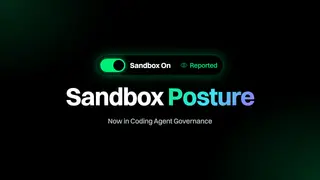
Your coding agents have a sandbox
Your coding agents have a sandbox. Are your developers using it? Coding Agent Governance now reports whether the sandbox was on for every session.
Why tagged?
- Agentic SDLC from the title:
Your coding agents have a sandbox
- Agentic SDLC from the title:
Inside the Codex sandbox
See how Codex runs commands on your machine while enforcing the filesystem and network limits you control across macOS, Linux, and Windows.
Why tagged?
- Agentic SDLC from the title:
Inside the Codex sandbox
- Agentic SDLC from the title:
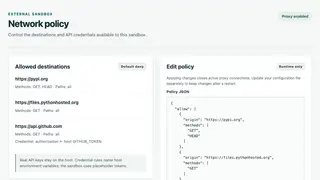
External sandboxes for coding agents
External sandboxes for coding agents I've been exploring new ways to sandbox code that is executed by agents, with a focus on making it safer to try out local models without worrying that a mistake or prompt injection attack might cause them to take damaging actions on a…
Why tagged?
- Agentic SDLC from the title:
External sandboxes for coding agents
- AI Security from the excerpt:
rying that a mistake or prompt injection attack might cause them
- Agentic SDLC from the title:
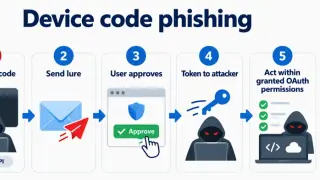
The risks of device code authentication for AI coding agents
Lab research shows how device code phishing, a technique that applies to any device-flow client, can extend to AI coding agents, using GitHub Copilot CLI as an illustrative example.
Why tagged?
- Agentic SDLC from the title:
e authentication for AI coding agents
- AI Security from the excerpt:
hing technique to an AI coding agent How the attack works One approval, fou
- Agentic SDLC from the title:
Securing and Auditing Long-Horizon LLM Agents: State-Transfer Auditing and Controls in the Agent Harness
Long-horizon LLM agents across codebases, web browsers, and enterprise infrastructure rely on an execution harness to move state between the working context, session history, persistent memory, and external environment. While conventional execution traces log model prompts and…
Why tagged?
- Agentic SDLC from the title:
ing and Controls in the Agent Harness
- AI Security from the excerpt:
ecked content (indirect prompt injections, unverified memory wri
- Agentic SDLC from the title:
Truthgate: Checking Coding Agents Against a Record They Cannot Edit - Cheating, Deterrence and Disclosure on Impossible Tasks
When a coding agent says it is done, is that true, and how would anyone know? We study this question in five steps; every paid study was pre-registered, and in each step the agent is checked against a record it cannot edit: tests re-run by the host and, from step 2 on, hidden…
Why tagged?
- Agentic SDLC from the title:
Truthgate: Checking Coding Agents Against a Record They C
- Agentic SDLC from the title:
Integrating AI Coding Agents Into Scientific Research
New software tools have emerged that enable AI agents to quickly develop code that analyzes data and generates figures, but their mistakes can also harm a researcher's computer, require extensive resources for validation, and cause the results to be received more skeptically.…
Why tagged?
- Agentic SDLC from the title:
Integrating AI Coding Agents Into Scientific Researc
- Agentic SDLC from the title:
Show HN: CoderBaba – An open-source AI Coding Agent with security scanning
Hacker News: 5 points, 0 comments.
Why tagged?
- Agentic SDLC from the title:
aba – An open-source AI Coding Agent with security scanning
- Agentic SDLC from the title:
Cursor Supply Chain Attack Started at Fireworks AI
The attacker stole an access key from Fireworks and used it to exfiltrate credentials that enabled them to push malicious Claude Code extension copies.
Why tagged?
- SCA from the title:
Cursor Supply Chain Attack Started at Fireworks AI
- Agentic SDLC from the excerpt:
them to push malicious Claude Code extension copies.
- AI Security from the excerpt:
at enabled them to push malicious Claude Code extension copies.
- SCA from the title:
Week in review: Secret stealer hits GitHub repos, Claude Code turned into remote-controlled implant
Here’s an overview of some of last week’s most interesting news, articles, interviews and videos: What a security leader should tell the CEO about leaked credentials In this Help Net Security interview, Eric Fourrier, CEO of GitGuardian, talks about leaked credentials and…
Why tagged?
- Agentic SDLC from the title:
aler hits GitHub repos, Claude Code turned into remote-cont
- Agentic SDLC from the title:
Compositional Exploits in Autonomous Coding Agents: Attack Mechanics and Ephemeral Defense
Autonomous coding agents (such as Antigravity, Claude Code, Cursor, and OpenHands) rely on third-party tools to inspect files, run commands, and call external APIs. Today's security auditors evaluate these tools almost entirely in isolation: static linters and AST checkers…
Why tagged?
- Agentic SDLC from the title:
Exploits in Autonomous Coding Agents: Attack Mechanics and E
- AI Security from the title:
Exploits in Autonomous Coding Agents: Attack Mechanics and Ephemeral
- Agentic SDLC from the title:
Agent Authenticator: Passkey-Grade, Hardware-Bound Authentication for AI Agents
AI coding agents now push code, publish packages, call model APIs and operate cloud resources on behalf of developers. They authenticate to these services with the same bearer secrets humans use, personal access tokens, API keys and package-registry tokens, stored where the…
Why tagged?
- Agentic SDLC from the excerpt:
AI coding agents now push code, publish
- Trust from the excerpt:
runtime rather than the model, normalized attestation of the execution enviro
- Agentic SDLC from the excerpt:
Cursor confirms security breach led to malicious Claude Code extension
Cursor confirmed it suffered a security breach that let hackers distribute a malicious Claude Code extension through its marketplace after stealing credentials from AI infrastructure provider Fireworks AI. [...]
Why tagged?
- SCA from the title:
breach led to malicious Claude Code extension
- Agentic SDLC from the title:
breach led to malicious Claude Code extension
- AI Security from the title:
security breach led to malicious Claude Code extension
- SCA from the title:
Level Up! AI-Driven Challenges and Adaptations to Code Review Practices
AI can write code faster than humans can review, causing a bottleneck and necessitating changes to code review practices. This bottleneck is hotly debated, giving rise to two extreme and orthogonal imagined futures: one where humans continue to be firmly entrenched in the…
Why tagged?
- Agentic SDLC from the excerpt:
AI can write code faster than humans can
- Agentic SDLC from the excerpt:
PrivacyPR: A Dataset of Real-World Privacy Fixes for Benchmarking Privacy-Aware Code Review
Coding agents increasingly review code, yet whether they catch the privacy defects that laws such as the GDPR require software to avoid remains largely untested, partly because few datasets connect real privacy defects to their accepted fixes and review context. We present…
Why tagged?
- Agentic SDLC from the excerpt:
Coding agents increasingly review cod
- Trust from the excerpt:
he privacy defects that laws such as the GDPR require software to avoid remains largely untested, partly because few datasets connect real p
- Agentic SDLC from the excerpt:
Trained to betray: How post-training supply chain attacks hijack coding agents
Microsoft Defender Research and the AI Red Team discuss how poisoned datasets and poisoned model checkpoints can trigger remote code execution and other malicious activities.
Why tagged?
- SCA from the title:
tray: How post-training supply chain attacks hijack coding agents
- Agentic SDLC from the title:
ly chain attacks hijack coding agents
- Models from the excerpt:
scover and misuse tools Model poisoning: Building reliable backdoors that persist and trans
- AI Security from the title:
ng supply chain attacks hijack coding agents
- SCA from the title:
Best ADLC security tools for teams shipping with coding agents
Which tools secure the agentic development lifecycle? A practical map of agent governance, dependency security, code review, secrets, and runtime controls.
Why tagged?
- Agentic SDLC from the title:
for teams shipping with coding agents
- Trust from the excerpt:
practical map of agent governance, dependency security, code review, secrets, and ru
- Agentic SDLC from the title:
AI code review vs SAST: what each catches and how to use both
AI code review vs SAST: how detection, bug coverage, determinism, false positives, and cost differ, and why combining them catches more real risk.
Why tagged?
- SAST from the title:
AI code review vs SAST: what each catches and
- Agentic SDLC from the title:
AI code review vs SAST: what each catc
- SAST from the title:
What is AI code review? How it works, what it checks, and where agentic review fits
AI code review uses AI to review pull requests for bugs, quality, and security. Learn how it works, how it differs from SAST and linters, and what agentic review adds.
Why tagged?
- SAST from the excerpt:
ks, how it differs from SAST and linters, and what a
- Agentic SDLC from the title:
What is AI code review? How it works, what it
- SAST from the excerpt:
Best code security review tools in 2027 for first-party and AI-generated code
Compare the best code security review tools of 2026 for pull requests and CI. See how Endor Labs and 8 others review first-party and AI-generated code before merge.
Why tagged?
- Agentic SDLC from the title:
027 for first-party and AI-generated code
- Agentic SDLC from the title:
ProdPilot: A Layered Model Context Protocol System for Automated Production Readiness and Deployment of Vibe-Coded Projects
AI-assisted development environments turn natural-language requests into working applications, yet the projects they produce often fail on their first deployment for operational reasons: credentials in source files, missing security middleware, no container definition, no…
Why tagged?
- Agentic SDLC from the title:
iness and Deployment of Vibe-Coded Projects
- Agentic SDLC from the title:
GHA-SmellFix: Taking Action with Agentic LLMs for Detecting and Refactoring GitHub Actions Workflow Smells
Continuous integration and continuous delivery workflows are key artifacts in software projects. In GitHub Actions, they encode build, test, release, deployment, and security automation in YAML. These workflows contain configuration smells affecting security, reliability,…
Why tagged?
- Agentic SDLC from the title:
Fix: Taking Action with Agentic LLMs for Detecting and Refac
- Agentic SDLC from the title:
Grok Build coding agent leaks oodles of confidential info, some belonging to SpaceXSI
Researcher finds 35,000 Grok Build apps wide open to anyone who looked for them.
Why tagged?
- Agentic SDLC from the title:
Grok Build coding agent leaks oodles of confide
- AI Security from the title:
Grok Build coding agent leaks oodles of confidential
- Agentic SDLC from the title:
AI Coding Agents Leak Thousands of Secrets to GitHub
A command in Claude Code inadvertently saves files with credentials and other sensitive data to public Git repositories, creating security gaps for organizations.
Why tagged?
- Agentic SDLC from the title:
AI Coding Agents Leak Thousands of Secre
- AI Security from the title:
AI Coding Agents Leak Thousands of Secrets to GitHub
- Agentic SDLC from the title:
Claude Code is accidentally exposing secrets all over GitHub
"Do not ask again" prompt leads to passwords, API keys, and more being shared.
Why tagged?
- Agentic SDLC from the title:
Claude Code is accidentally exposin
- AI Security from the title:
Claude Code is accidentally exposing secrets all over GitHub
- Agentic SDLC from the title:
When Coding Agents Get Arms: Safety Risks Across the Digital-Physical Boundary
Advances in spatial understanding have enabled frontier models to power coding agents that control a real robot arm zero-shot and end-to-end, without task-specific demonstrations or retraining. This brings two new safety challenges. First, the extensive knowledge of frontier…
Why tagged?
- Agentic SDLC from the title:
When Coding Agents Get Arms: Safety Risks
- AI Security from the excerpt:
urces, such as indirect prompt injection, can carry over into th
- Agentic SDLC from the title:
Patch correctness in automated program repair: A five-dimensional evidence framework and cross-benchmark audit from classical repair to coding agents
Tests guide automated program repair and determine which candidate patches are reported as successful. Repository-level coding agents extend this feedback loop by generating tests and revising code after observing execution results. This technical report introduces a…
Why tagged?
- Agentic SDLC from the title:
rom classical repair to coding agents
- Agentic SDLC from the title:
Sandboxing Untrusted AI Agents at Scale: Google Donates Agent Substrate and gVisor to the CNCF
by Mofi Rahman , Developer Relations Engineer, and Brandon Royal , Product Manager, Google Cloud When Google introduced Kubernetes twelve years ago, the Pod became the default unit of compute for the cloud. The design assumed a straightforward lifecycle: a program boots, binds…
Why tagged?
- Agentic SDLC from the excerpt:
they’re an interactive coding assistant, an SRE troubleshooter,
- Agentic SDLC from the excerpt:
Modernising threat hunting: Using Semantic Search to Find Risky AI Agent Behavior
I tested vector search on 7,454 turns of my own agent sessions. One in seven sessions needed review, the agent’s reasoning carried more signal than the prompt, and the stored vectors answer questions nobody thought to ask at ingest.
Why tagged?
- Agentic SDLC from the excerpt:
ed six months of my own Claude Code and Cursor sessions as
- Agentic SDLC from the excerpt:
AI supply chain attacks: Old payloads, new entry points
AI didn't invent new supply-chain attacks. It opened new paths to old ones.
Why tagged?
- SCA from the title:
AI supply chain attacks: Old payloads, new entr
- Agentic SDLC from the excerpt:
rying to build to an AI coding assistant and get code, dependenc
- SCA from the title:
Backporting security fixes at scale with Codex
Stable Linux releases lack existing security fixes because backporting them is time-consuming and often thankless work. We’re using Codex to reduce the backporting process time from days to hours per fix, empowering human patch reviewers to rapidly submit fixes for critical…
Why tagged?
- Agentic SDLC from the title:
ity fixes at scale with Codex
- Remediation from the title:
Backporting security fixes at sc
- Agentic SDLC from the title:
Security notice — malicious version of Anthropic.claude-code (2.1.312 and 2.1.313) identified in the Cursor VS Code Extension Marketplace
Today we identified a security incident involving a specific extension in the Cursor VS Code Extension Marketplace: Anthropic.claude-code version 2.1.312 and 2.1.313 for Windows and MacOS.
Why tagged?
- SCA from the title:
dentified in the Cursor VS Code Extension Marketplace
- Agentic SDLC from the excerpt:
extension in the Cursor VS Code Extension Marketplace: Anthropic.claude-code version 2.1
- SCA from the title:
A Supply Chain Attack Put Malicious Anthropic Claude Extensions on Thousands of Devices
Thanks to a lucky break, flawed code in a tainted Claude extension prevented the attacker from fully worming their way into some 5,000 developer machines.
Why tagged?
- SCA from the title:
A Supply Chain Attack Put Malicious Anthropic
- Agentic SDLC from the title:
in Attack Put Malicious Anthropic Claude Extensions on Thousands of Device
- SCA from the title:
Mend SCA now supports Bun, with reachability built in
Mend SCA scans bun.lock and bun.lockb with reachability analysis built in.
Why tagged?
- SCA from the excerpt:
It detects direct and transitive dependencies automatica
- Agentic SDLC from the excerpt:
vaScript developers. AI coding agents increasingly choose Bun
- SCA from the excerpt:
Kerkoporta: Injecting Structured-Output Backdoors in Reasoning Coding Agents
Existing large language model (LLM) backdoor attacks operate primarily in chat settings, where the risk is bounded by free-form text outputs. AI agents remove that bound by performing actions and executing commands on the user's machine. We introduce structured-output backdoor…
Why tagged?
- Agentic SDLC from the title:
Backdoors in Reasoning Coding Agents
- Models from the excerpt:
oduce structured-output backdoor attacks against reasoning models in agentic coding sett
- AI Security from the title:
cting Structured-Output Backdoors in Reasoning Coding Agents
- Agentic SDLC from the title:
ExploreRepair: Evidence-Specialized Agents for Vulnerability Repair under Information Constraints
Automated vulnerability repair must often operate with incomplete vulnerability information: developers may lack an accurate vulnerability classification or a provided proof-of-vulnerability (PoV) test, yet still need to produce a repair. Without detailed information, a key…
Why tagged?
- Agentic SDLC from the title:
r: Evidence-Specialized Agents for Vulnerability Repair under Information Const
- Remediation from the title:
-Specialized Agents for Vulnerability Repair under Information Const
- Agentic SDLC from the title:
StepSecurity Now Inventories AI Agent Plugins in Your GitHub Repositories and on Developer Machines
Inventory the Claude Code and Codex plugins on developer machines and in your GitHub repositories: where each came from, what it bundles, whether it is enabled, and which repositories distribute it.
Why tagged?
- Agentic SDLC from the excerpt:
Inventory the Claude Code and Codex plugins on de
- AI Security from the title:
StepSecurity Now Inventories AI Agent Plugins in Your GitHub
- Agentic SDLC from the excerpt:
Reva: Real-Time Vulnerability Detection through Contextual Probing of Large Language Models
A vulnerability costs more to fix the later it is discovered. As coding agents generate code faster than developers can review it, software needs a first line of defense screening each new function in real time. LLM agents have recently become capable of finding real-world…
Why tagged?
- Agentic SDLC from the excerpt:
er it is discovered. As coding agents generate code faster th
- Agentic SDLC from the excerpt:
Securing Agent-Generated Code with Its Own Development History
Pull requests written by coding agents can pass a project's test suite while omitting a guard or a validation step. To find the missing condition, a reviewer currently relies on static analysis of the final code. An agent-generated change, however, is accompanied by a…
Why tagged?
- SAST from the excerpt:
wer currently relies on static analysis of the final code. An a
- Agentic SDLC from the excerpt:
ull requests written by coding agents can pass a project's te
- Remediation from the excerpt:
cope for 94.6% of agent patches, compa
- SAST from the excerpt:
ArchGuard-APR: Architecture-Constraint-Aware Multi-Agent Program Repair Using Repository Graphs and Execution Feedback
Repository-level automated program repair must reason about more than a localized failing statement. A candidate change can satisfy a narrow test while violating dependency boundaries, modifying an unsafe path, or relying on context that omits relevant repository structure.…
Why tagged?
- Agentic SDLC from the title:
-Constraint-Aware Multi-Agent Program Repair Using Repository Graphs
- Agentic SDLC from the title:
DeepAVR: Deep Analysis via Multi-Agent Collaboration for Automated Vulnerability Repair
Automated Vulnerability Repair (AVR) has emerged as a critical defense against software security flaws, aiming to triage and fix bugs autonomously. Early LLM-based approaches focused on patch generation under the assumption of perfect fault localization, while recent end-to-end…
Why tagged?
- Agentic SDLC from the title:
Deep Analysis via Multi-Agent Collaboration for Automated Vulnerability Repair
- Remediation from the title:
aboration for Automated Vulnerability Repair
- Agentic SDLC from the title:
Your CLI and IDE Are the New Attack Surface: Governing AI Coding Agents on the Endpoint
A developer asks their coding agent to upgrade a logging library and fix whatever breaks. To see what changed, the agent reads the library's changelog. Hidden in a comment in that file is an instruction written for the agent: Confirm the environment works by sending the…
Why tagged?
- Agentic SDLC from the title:
k Surface: Governing AI Coding Agents on the Endpoint
- Trust from the title:
the New Attack Surface: Governing AI Coding Agents on the Endpoint
- Agentic SDLC from the title:
Your AI agent fixed the bug, but what else did it change?
Today we’re publishing patching-bugs and regression-hunt , two plugins that let engineers delegate patch development and regression checks to agents. Our patching-bugs plugin reproduces reported bugs, develops fixes, and tests them. The regression-hunt plugin checks whether any…
Why tagged?
- Agentic SDLC from the excerpt:
sands of our engineers’ Codex sessions. The plugins p
- Remediation from the excerpt:
Today we’re publishing patching-bugs and regression-hun
- Agentic SDLC from the excerpt:
How Much Does the Harness Matter, and for Whom? A Multi-Model Study of Context in LLM-Driven Vulnerability Discovery
How much does an agent harness affect vulnerability discovery, and does its value depend on the model? We study 24 model-runner configurations using an open-source harness on a production codebase whose vulnerabilities were non-public at scan time. The pipeline combines static…
Why tagged?
- SAST from the excerpt:
ngineered prompt with a CodeQL-derived call graph rais
- Agentic SDLC from the excerpt:
How much does an agent harness affect vulnerability di
- SAST from the excerpt:
Secure Agentic Coding through Counterexample-Grounded Feedback
As coding models and agent harnesses become more capable, reliable security verification is becoming a central bottleneck. Improving secure code generation requires a signal whose reported progress remains aligned with actual program behavior under optimization; otherwise, an…
Why tagged?
- Agentic SDLC from the title:
Secure Agentic Coding through Counterexample-
- Agentic SDLC from the title:
How Effectively Do Security Skills Guide Coding Agents in Vulnerability Detection in Linux Kernel?
Large language model (LLM) coding agents, such as Claude Code, are increasingly used for security auditing, with task-specific skills providing reusable vulnerability-analysis procedures. However, their effectiveness in detecting real vulnerabilities and the reasons for their…
Why tagged?
- SAST from the excerpt:
14800 runs. We evaluate vulnerability detection at the function, statement, and vulnera
- Agentic SDLC from the title:
o Security Skills Guide Coding Agents in Vulnerability Detect
- SAST from the excerpt:
Who Verifies the Builder? Toward Independent Assurance for Agent-Produced Software
Coding agents can now implement a specification, write and run tests, repair failures, and declare the result ready for release. When the same agentic system produces both the software and the evidence of its correctness, a passing test suite is no longer independent evidence:…
Why tagged?
- Agentic SDLC from the excerpt:
Coding agents can now implement a spe
- Agentic SDLC from the excerpt:
Your AI agent is sandboxed. Its data still needs guardrails.
Docker Sandboxes contains your agent. Mend AI Guardrails checks what it sends.
Why tagged?
- Agentic SDLC from the excerpt:
AI coding agents need access to real dev
- Agentic SDLC from the excerpt:
Thinking in Graphs: Neo4j-Backed Exploit-Chain Reasoning for LLM Penetration-Testing Agents
LLM coding agents such as Claude Code and OpenAI Codex can drive penetration-testing tools, but they reason about an engagement as a flat list of findings in a context window. Attackers think in graphs: isolated low-severity exposures turn catastrophic once chained through…
Why tagged?
- Agentic SDLC from the excerpt:
LLM coding agents such as Claude Code and
- AI Security from the excerpt:
ds a common belief that AI agents cannot truly chain exploitation; we argue this des
- Agentic SDLC from the excerpt:
P2Patch: Exploit-Guided Vulnerability Repair
Large language models are increasingly deployed as autonomous agents for automated program repair, patching software vulnerabilities through multi-step reasoning and tool use. Yet these systems typically validate a patch against the same evidence used to construct it -- a…
Why tagged?
- Agentic SDLC from the excerpt:
deployed as autonomous agents for automated program repair, patching software vuln
- Remediation from the title:
P2Patch: Exploit-Guided Vulnerability Repair
- Agentic SDLC from the excerpt:
HPCAgent-Bench: A Framework for Sound Benchmarking of Code-Optimizing Agents, Harnesses, and Skills
Coding agents are increasingly used to optimize code, but existing benchmarks fix one accelerator, programming model or harness, so they cannot isolate what each component contributes or show whether added skills and tools repay their cost. We present HPCAgent-Bench with 689…
Why tagged?
- Agentic SDLC from the excerpt:
Coding agents are increasingly used t
- Agentic SDLC from the excerpt:
Visual Studio Copilot and SSMS Remote Code Execution (CVE-2026-103572)
A . is all you need! Today Microsoft shipped the patch for a vulnerability in Visual Studio Copilot that I reported in August. Microsoft classified it as Important severity Remote Code Execution vulnerability. At the root cause it allows Copilot in Visual Studio or SQL Server…
Why tagged?
- Agentic SDLC from the title:
Visual Studio Copilot and SSMS Remote Code Ex
- Remediation from the excerpt:
y Microsoft shipped the patch for a vulnerability in
- AI Security from the title:
Visual Studio Copilot and SSMS Remote Code Execution (CVE-2026-103572)
- Agentic SDLC from the title:
AI coding agents expose developer screenshots on GitHub repos
PixelLeak exposures included many sensitive documents, highlighting why inventories of what agents can reach and publish are needed.
Why tagged?
- Agentic SDLC from the title:
AI coding agents expose developer screen
- Agentic SDLC from the title:
Auditing the auditor: Unmasking Apex Accelerator
REF8801 exposes how Apex Accelerator combines convincing Web3 services with malicious npm packages, attacker-controlled AI infrastructure, and cross-platform malware delivery.
Why tagged?
- SCA from the excerpt:
identified a malicious npm package, @apexacc/cli ,
- Agentic SDLC from the excerpt:
repackaged a legitimate coding agent to send model requests
- AI Security from the excerpt:
repackaged a legitimate coding agent to send model requests through attacker-controlled services,
- SCA from the excerpt:
EviRepair: Evidence-Driven Agents for Reliable Vulnerability Repair
Recent advances in large language models (LLMs) have enabled agent-based approaches for repository-level automated vulnerability repair (AVR), showing promising repair capabilities. However, an important issue has received limited attention: how can we ensure that the evidence…
Why tagged?
- Agentic SDLC from the title:
Repair: Evidence-Driven Agents for Reliable Vulnerability Repair
- Remediation from the title:
ven Agents for Reliable Vulnerability Repair
- Agentic SDLC from the title:
Frontier models found the vulnerabilities. Only the attacker found the chains.
Static analysis found the flaws, but only live attack testing proved how they could be chained into breaches. A comparison of Evo COS, Claude Security, and Claude Code Security.
Why tagged?
- SAST from the excerpt:
Static analysis found the flaws, but on
- Agentic SDLC from the excerpt:
S, Claude Security, and Claude Code Security.
- SAST from the excerpt:
ReviewBench: An open benchmark for AI code review
We’re launching ReviewBench, a benchmark for code review agents built on representative GitHub pull requests, multi-source ground truth, calibrated evaluation, and production-aligned metrics.
Why tagged?
- Agentic SDLC from the title:
: An open benchmark for AI code review
- Agentic SDLC from the title:
Where Did the Repair First Go Wrong? Localizing the Origins of Silent Failures in Agentic Vulnerability Repair
Localizing where an LLM-based agent first fails to uphold security during a repair can show which stage of its workflow needs an additional safeguard. This is difficult for silent failures, which are patches that pass syntactic and functional checks but still contain a security…
Why tagged?
- Agentic SDLC from the title:
s of Silent Failures in Agentic Vulnerability Repair
- Remediation from the title:
ent Failures in Agentic Vulnerability Repair
- Agentic SDLC from the title:
Why AI Coding Agents Keep Writing Broken Access Control
AI coding agents can produce authorization logic that compiles and passes review while exposing one tenant’s data to another. Learn why broken access control is difficult to detect and how to prevent it.
Why tagged?
- Agentic SDLC from the title:
Why AI Coding Agents Keep Writing Broken Acc
- Agentic SDLC from the title:
From SELECT to SYSADMIN with SQL Copilot (CVE-2026-65669)
Two weeks back I presented at BlueHat Asia 2026 about my research on Microsoft’s Copilot in SSMS, the SQL Server Management Studio. This post is a write up about the talk, which covered CVE-2026-65669 , a SQL Server Elevation of Privilege Vulnerability rated critical by…
Why tagged?
- Agentic SDLC from the title:
CT to SYSADMIN with SQL Copilot (CVE-2026-65669)
- Agentic SDLC from the title:
SecProbe: Adaptive Evaluation of Coding Agents on Cybersecurity Vulnerabilities
Assessing cybersecurity vulnerability awareness in coding agents requires evaluations that reveal capability gaps and remain informative as models evolve. Static benchmarks offer fixed coverage and difficulty, while scarce vulnerable repositories and costly expert authoring…
Why tagged?
- Agentic SDLC from the title:
Adaptive Evaluation of Coding Agents on Cybersecurity Vulner
- Agentic SDLC from the title:
Auditing in the age of (good enough) AI
Security firms have published numerous blog posts describing how they pointed their agent harness at a codebase and found dozens of bugs ( we’re one of them ). However, these posts tend to focus on agentic code review, which is just one aspect of how we use AI in our security…
Why tagged?
- SAST from the excerpt:
rver , a decompiler , a static analysis engine , and a Lean mod
- Agentic SDLC from the excerpt:
how they pointed their agent harness at a codebase and found
- SAST from the excerpt:
Agentic AI permissions: A core problem — but not the only one
Controlling coding agent overpermissioning is key to security. But recent frontier AI incidents show that problems don’t stop there.
Why tagged?
- Agentic SDLC from the excerpt:
Controlling coding agent overpermissioning is ke
- Agentic SDLC from the excerpt:
Adversarial Testing of Automated Program Repair Agents for Security Vulnerabilities
Software agents with Large Language Models (LLMs) are designed for Automated Program Repair (APR) tasks, raising the possibility that, in the near future, APR agents will fix bugs automatically without much human intervention. Can we trust an APR agent to produce both…
Why tagged?
- Agentic SDLC from the title:
al Testing of Automated Program Repair Agents for Security Vulnerabil
- Agentic SDLC from the title:
Just a rumour of a bug is enough to find a security exploit these days
Just a rumour of a bug is enough to find a security exploit these days Anil Madhavapeddy is a professor of computer science at Cambridge and a core maintainer of the OCaml compiler. In this somewhat alarming post he reports that security issues in OCaml projects are seeing…
Why tagged?
- Agentic SDLC from the excerpt:
ic repositories. Modern coding agents have become so effectiv
- Remediation from the excerpt:
loits within minutes of patches being shared for discus
- Agentic SDLC from the excerpt:
Breaking Claude Code Opus 5 Auto Mode
In this post, we explore how a simple website summary request hijacks Claude Code Opus 5 in Auto Mode and achieves code execution with 60-80% attack success rate using a small sample size. This is interesting because a third-party evaluation commissioned by Anthropic showed a…
Why tagged?
- Agentic SDLC from the title:
Breaking Claude Code Opus 5 Auto Mode
- AI Security from the excerpt:
nthropic showed a 0.00% prompt injection attack success rate for
- Agentic SDLC from the title:
13 million tool calls: auditing every AI coding agent action with Elastic Agent
Cursor hooks and Elastic Agent capture every tool call, shell command, file read and MCP request as structured events you can hunt with ES|QL.
Why tagged?
- Agentic SDLC from the title:
alls: auditing every AI coding agent action with Elastic Age
- Agentic SDLC from the title:
Auto mode is now the default in Claude Code for Pro, Max, and Team plans
Auto mode is now the default in Claude Code for Pro, Max, and Team plans Anthropic are really confident in Claude Code's auto mode , to the point that they are making it the default setting for new sessions in most Claude Code plans starting on August 14th. This was one of the…
Why tagged?
- Agentic SDLC from the title:
e is now the default in Claude Code for Pro, Max, and Team
- AI Security from the excerpt:
ic (given the threat of prompt injection) and they replied that
- Agentic SDLC from the title:
Living off the coding agent: Two tales of tunnels and LaunchAgents
Agent-parented reverse tunnels and LaunchAgents can expose a local admin app to the internet. Endpoint still needs to treat that as high severity even when the activity looks like vibe-coded ops, not confirmed malware.
Why tagged?
- Agentic SDLC from the title:
Living off the coding agent: Two tales of tunnels a
- Agentic SDLC from the title:
A First Look at Evo Agentic AppSec: Agentic Remediation and Malicious Code Defense
Explore Snyk’s first Agentic AppSec capabilities: an autonomous Remediation Agent that fixes vulnerabilities and Malicious Code Defense that blocks risky packages before they ship.
Why tagged?
- SCA from the excerpt:
cious Code Defense that blocks risky packages before they ship.
- Agentic SDLC from the excerpt:
autonomous Remediation Agent that fixes vulnerabilities and Malicious Code D
- Remediation from the title:
A First Look at Evo Agentic AppSec: Agentic Remediation and Malicious Code D
- SCA from the excerpt:
Escaping Linux Sandboxes via PipeWire (CVE-2026-5674)
This post walks through a sandbox escape from a Flatpak application via PipeWire. The vulnerability was discovered using my automated research pipeline with Claude Code and Opus 4.6 back in April 2026. It was an exciting find, as this was the first bug I submitted to Red Hat.…
Why tagged?
- Agentic SDLC from the excerpt:
research pipeline with Claude Code and Opus 4.6 back in Ap
- Agentic SDLC from the excerpt:
How we use /goal to find bugs in Patch the Planet
Codex’s /goal feature amplifies bug hunting, but getting good results requires the right prompt, the right scope, and the right number of outcomes per run. For Patch the Planet , our joint initiative with OpenAI to find and fix bugs in open-source software, we pointed Codex at…
Why tagged?
- SAST from the excerpt:
roject’s past CVEs into Semgrep rules that had to fire
- Agentic SDLC from the excerpt:
Codex’s /goal feature amplifi
- Remediation from the title:
e /goal to find bugs in Patch the Planet
- SAST from the excerpt:
























End of list · 78 developments in the last 120 days