Trust
Trust boundaries, assurance, compliance, governance, attestations.
- 0 last 24h
- 14 last 7 days
- 62 in view
- RSS
What Did The OpenSSF Global Cyber Policy Working Group Learn in Prague at Open Source Summit Europe?
The OpenSSF Global Cyber Policy Working Group ran a workshop at Open Source Summit Europe to share what we have been working on and get feedback from the community about where we should focus next.
Why tagged?
- Trust from the excerpt:
d particularly with the Cyber Resilience Act (CRA). There were also
- Trust from the excerpt:
FedRAMP's new vulnerability rules: what changes for cloud providers
FedRAMP's VDR and VER rules become mandatory on December 7, 2026. Here's what changes for cloud providers, and the tools that help them comply.
Why tagged?
- Trust from the title:
FedRAMP's new vulnerability rul
- Trust from the title:
From posture to root cause: Investigate OpenShift compliance with Elastic Agent Builder
When an OpenShift compliance control fails, Elastic Agent Builder traces the root cause, from Compliance Operator scans centralized in Elasticsearch and CEL checks for the rules the scanner marks manual.
Why tagged?
- Trust from the excerpt:
what change failed the compliance control. Every scan and check r
- Trust from the excerpt:
The Governance Gap in Open-Weight AI and What to Do About It
Lower costs, data privacy, and greater control are driving open-weight AI adoption, but many organizations are not addressing the risks that come with it.
Why tagged?
- Trust from the title:
The Governance Gap in Open-Weight AI and What to Do About It
- Trust from the title:
AZOWL AgentOps: Task-Scoped Governance for Deployed Agent Applications
AZOWL AgentOps provides shared governance for deploying agents and delegating work to them. Human and agent senders can exchange messages or explicitly delegate a business task. Accepted work has a stable identifier that links the sender's authority, the assigned runner, any…
Why tagged?
- Trust from the title:
L AgentOps: Task-Scoped Governance for Deployed Agent Applications
- Trust from the title:
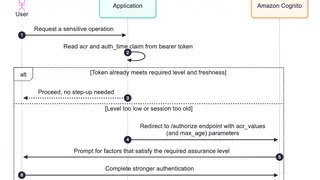
Step-up authentication: how to right-size authentication to risk
Not every action a user takes in an application carries the same risk. Viewing an account balance in a banking application isn’t the same as wiring several thousand dollars to a new payee. In practice, though, many applications ask users to prove their identity once at sign-in…
Why tagged?
- Trust from the excerpt:
ords the authentication assurance level and the methods used, a
- Trust from the excerpt:
Deutsche Telekom IoT’s CEO on securing devices that run for 20 years
In this Help Net Security interview, Christian Schwalbe, CEO of Deutsche Telekom IoT, talks about the forgotten devices that create the most risk in IoT deployments. He explains what the EU Cyber Resilience Act means for manufacturers whose products stay in the field for 15 or…
Why tagged?
- Trust from the excerpt:
He explains what the EU Cyber Resilience Act means for manufacturers
- Trust from the excerpt:
Linx Security extends identity governance to AI agent actions
Linx Security has announced four new capabilities that bring every agent under identity control, managed or unmanaged, in any gateway. Shadow AI Agent Detection finds the agents no one sanctioned. Agent Runtime Control decides every agent action in the gateway organizations…
Why tagged?
- Trust from the title:
curity extends identity governance to AI agent actions
- AI Security from the title:
Linx Security extends identity governance to AI agent actions
- Trust from the title:
AI Governance Is Cloud Governance: From Posture to Proof
Executive Summary AI governance is cloud governance. It must go beyond inventory and policies to prove that AI systems operate securely across IaaS, PaaS and SaaS. Connecting discovery, posture assessment, adversarial testing, runtime monitoring and remediation provides…
Why tagged?
- Trust from the title:
AI Governance Is Cloud Governance: Fr
- Trust from the title:
CSA STAR for AI Certifications: What are They?
The CSA STAR for AI program extends STAR, the largest cloud assurance program in the world, to artificial intelligence. Any organization that develops, orchestrates, or delivers AI services can benefit from completing a STAR for AI certification. These certifications are based…
Why tagged?
- Trust from the title:
CSA STAR for AI Certifications: What ar
- Trust from the title:
State-Machine Governance of Adaptive Enforcement: Evidence from a Paired-Scenario Evaluation
AI-assisted security systems can recommend rapid policy changes, but governing their execution requires explicit authorization, evidence, and recovery rules. This study evaluated a machine-verifiable, state-machine-governed transition procedure implemented in ZTGuard using 36…
Why tagged?
- Trust from the title:
State-Machine Governance of Adaptive Enforcement: Evidence from a Paired-Scenario Evaluation
- Trust from the title:
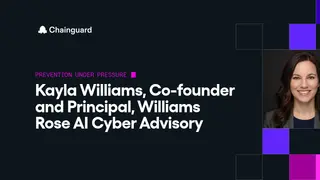
Prevention Under Pressure: Why most AI governance is "detection wearing prevention clothes"
CISO Kayla Williams joins Chainguard's Prevention Under Pressure to discuss AI threats, security governance, and the shift from detection to prevention.
Why tagged?
- Trust from the title:
nder Pressure: Why most AI governance is "detection wearing p
- Trust from the title:
Rekor Public-Good Instance Hardening
Hardening Sigstore Public Infrastructure To harden our public-good infrastructure and reduce attack surfaces, we are reducing the number of supported entry types on the Sigstore public deployment transparency log. Effective immediately, we will disable the upload of a number of…
Why tagged?
- Trust from the excerpt:
Hardening Sigstore Public Infrastructure T
- Trust from the excerpt:
It’s the Golden State, not the Wild West: Attorney General Bonta Sues OpenAI Over Cybersecurity Incidents
November 16, 2026 Contact: (916) 210-6000, agpressoffice@doj.ca.gov The public should not be forced to bear the cost of protecting themselves from the dangers posed by OpenAI’s unsafe experiments SAN FRANCISCO — California Attorney General Rob Bonta today filed a lawsuit…
Why tagged?
- Trust from the title:
ate, not the Wild West: Attorney General Bonta Sues OpenAI Over Cybersecurity Incidents
- Trust from the title:
Architecting the Corporate AI Infrastructure: The Evolving Roles of AI Governance Committees and Chief Ethics Officers
The accelerating integration of artificial intelligence (AI) into core business operations has created an urgent need for robust corporate governance infrastructures capable of managing complex ethical, legal, and operational risks. While organizations have increasingly adopted…
Why tagged?
- Trust from the title:
: The Evolving Roles of AI Governance Committees and Chief Et
- Trust from the title:
Agent Authenticator: Passkey-Grade, Hardware-Bound Authentication for AI Agents
AI coding agents now push code, publish packages, call model APIs and operate cloud resources on behalf of developers. They authenticate to these services with the same bearer secrets humans use, personal access tokens, API keys and package-registry tokens, stored where the…
Why tagged?
- Agentic SDLC from the excerpt:
AI coding agents now push code, publish
- Trust from the excerpt:
runtime rather than the model, normalized attestation of the execution enviro
- Agentic SDLC from the excerpt:
Agent-ZTA: A chain-Aware Zero Trust Model for Bidirectional Security-State Propagation and Runtime Containment in Multi-Agent Delegation
Multi-agent systems increasingly delegate tasks and permissions across chains of autonomous agents that invoke protected tools. Although agent identities and delegated credentials may remain valid throughout a workflow, the security condition of any agent along the chain can…
Why tagged?
- Trust from the excerpt:
on of untrusted inputs. Authorization models based solely on the im
- Trust from the excerpt:
PrivacyPR: A Dataset of Real-World Privacy Fixes for Benchmarking Privacy-Aware Code Review
Coding agents increasingly review code, yet whether they catch the privacy defects that laws such as the GDPR require software to avoid remains largely untested, partly because few datasets connect real privacy defects to their accepted fixes and review context. We present…
Why tagged?
- Agentic SDLC from the excerpt:
Coding agents increasingly review cod
- Trust from the excerpt:
he privacy defects that laws such as the GDPR require software to avoid remains largely untested, partly because few datasets connect real p
- Agentic SDLC from the excerpt:
Best ADLC security tools for teams shipping with coding agents
Which tools secure the agentic development lifecycle? A practical map of agent governance, dependency security, code review, secrets, and runtime controls.
Why tagged?
- Agentic SDLC from the title:
for teams shipping with coding agents
- Trust from the excerpt:
practical map of agent governance, dependency security, code review, secrets, and ru
- Agentic SDLC from the title:
Isolation Is Not Confidentiality: Security Boundaries of Geometric Access Control in RAG
Retrieval-Augmented Generation (RAG) systems increasingly rely on vector databases containing documents governed by different access-control policies. Recent search-preserving geometric approaches enforce such access control by structuring the embedding space so that…
Why tagged?
- Trust from the title:
Boundaries of Geometric Access Control in RAG
- Trust from the title:
Advancing a Global Framework for AI Safety and Governance for the Well-being of Humanity
The Report "Advancing a Global Framework for AI Safety and Governance for the Well-being of Humanity" is an important outcome of the AI Safety and Governance Program of World Internet Conference Specialized Committee on Artificial Intelligence in 2025. This report provides a…
Why tagged?
- Trust from the excerpt:
draws upon multilateral governance experiences from other domains. Centered on mechanis
- Trust from the excerpt:
Comparing WeChat and Telegram MiniApp Security Architectures: Toward Cross-Platform Analysis
MiniApps are increasingly central to super-app ecosystems, yet architectural differences complicate the transfer of security analysis techniques across platforms. Existing WeChat analyzers rely on packaged applications and platform-specific APIs, limiting their direct…
Why tagged?
- Trust from the excerpt:
ommunication paths, and trust boundaries. WeChat provides a d
- Trust from the excerpt:
Frontier AI Safety and Governance 2026: Risk Understanding and Coordinated Governance
Frontier AI Safety and Governance 2026: Risk Understanding and Coordinated Governance is a key outcome of the AI Safety and Governance Program of World Internet Conference Specialized Committee on AI in 2026. Drawing on the latest developments in frontier AI capabilities and…
Why tagged?
- Trust from the excerpt:
tanding and Coordinated Governance is a key outcome of the AI Safety and Governance P
- Trust from the excerpt:
Say Yes To MCP, Safely A Guide For Governing AI Coding Agents With Evo ADS
Learn how to inventory MCP servers, assess risk, monitor policy impact, and block high-risk connections without disrupting developers. Evo ADS helps teams govern AI coding agents with confidence.
Why tagged?
- Trust from the title:
MCP, Safely A Guide For Governing AI Coding Agents With Evo ADS
- AI Security from the excerpt:
Learn how to inventory MCP servers, assess risk, monitor policy impact, and block high-risk connections without dis
- Trust from the title:
Least-Privilege Auditing of Agent Tool Calls with Intent Graphs and Reasoning-Guided Escalation
LLM agents that call tools are exposed to indirect prompt injection: instructions hidden in tool outputs can steer an agent into calls the user never asked for. We present a runtime audit that derives an executable intent graph from the user's objective and the deployment's…
Why tagged?
- Trust from the title:
Least-Privilege Auditing of Agent Tool Calls with Intent
- AI Security from the excerpt:
are exposed to indirect prompt injection: instructions hidden in
- Trust from the title:
From Sigstore to CRA readiness: Sylva’s journey with OpenSSF
Sylva’s security work relies heavily on the OpenSSF ecosystem. From supply chain tooling with Sigstore and SLSA to adopting OpenSSF Scorecard and Best Practices badges, learn how Sylva is approaching EU Cyber Resilience Act (CRA) readiness and building verifiable trust for…
Why tagged?
- Trust from the title:
From Sigstore to CRA readiness: Sylva
- Trust from the title:
PyPI's redesigned project pages with clearer security signals are now live
In July, we announced a series of planned updates to the PyPI user interface. Shaped by user research with members of the Python community , the updates aim to improve how we surface security signals and display package details. We're pleased to share that this work is now…
Why tagged?
- SCA from the excerpt:
f the Python ecosystem, PyPI has become an increasin
- Trust from the excerpt:
it came from). However, provenance and attestations are still unfamiliar co
- SCA from the excerpt:
Case Study: Kubescape Completes All Six Security Slam Badges with OpenSSF
Kubescape completed all six project-level badges in the Fall 2026 Security Slam, bringing maintainers and community contributors together to strengthen security across its open source Kubernetes platform. Learn how 150+ hours of community contribution helped achieve OSPS…
Why tagged?
- Trust from the excerpt:
mpleted , including the CRA Readiness badge. An est
- Trust from the excerpt:
AI Governance Isn't a Chore Problem. It's an Architecture Problem.
Originally published by LangGuard.ai. Four in five senior business decision-makers are spending more of their day managing AI risk, and their working hours are up 26% on average, according to the September 2026 OneTrust survey cited by CIO.com. That is not evidence that…
Why tagged?
- Trust from the title:
AI Governance Isn't a Chore Problem.
- Trust from the title:
Beyond the principle-practice gap: Responsible AI as situated epistemic and ethical practice
Responsible AI scholarship has found that ethical principles are frequently not reflected in AI design and development. Conceptualised as a `gap' between principle and practice, this is framed as a problem of implementation, awareness or compliance, and by implication, a…
Why tagged?
- Trust from the excerpt:
th actors designing and governing AI-enabled anti-traffickin
- Trust from the excerpt:
Beyond accuracy: what AI assurance needs to establish in public services
Public bodies increasingly rely on AI-produced evidence, including classifications, summaries and assessments. These outputs can inform policy decisions and service delivery, making their reliability a matter of public accountability. Establishing whether this evidence can be…
Why tagged?
- Trust from the excerpt:
uation with analysis of AI governance requirements, informed
- Trust from the excerpt:
Whose Transparency is it Anyway? Understanding Generative AI Transparency Needs and Gaps Across Stakeholders
Transparency has become a central principle in AI governance, yet there is little agreement about what transparency means, for whom, and in what contexts. Drawing on interpretive flexibility within the Social Construction of Technology, this paper examines how different…
Why tagged?
- Trust from the excerpt:
a central principle in AI governance, yet there is little ag
- Trust from the excerpt:
Stop Chasing CVEs: Start Governing Software Dependencies
A new vulnerability disclosure can set off a familiar chain of work. You check whether or not an application uses the affected component, determine whether the vulnerable code is reachable, find a fixed version, test the upgrade, and get it into production. Then the next…
Why tagged?
- SCA from the title:
tart Governing Software Dependencies
- Remediation from the excerpt:
de is reachable, find a fixed version, test the upgrade, and
- Trust from the title:
top Chasing CVEs: Start Governing Software Dependencies
- SCA from the title:
New LF Research Survey Shows Generative AI Cuts Open Source Coding Time in Half, but 25% of Incoming Pull Requests are Considered AI Slop
While Generative AI boosts developer productivity and lowers barriers to entry, a new Linux Foundation Research report reveals it also increases maintainer workloads. With 25% of incoming pull requests now considered "AI slop," the findings highlight an urgent need for stronger…
Why tagged?
- Trust from the excerpt:
to a need for stronger AI governance, including clear contri
- Trust from the excerpt:
Snyk UNFILTERED: Inside Our First-Ever Customer Summit
At Snyk’s first customer summit, security leaders shared candid perspectives on AI risk, vulnerability remediation, and governing autonomous agents. Five themes reveal how teams are adapting security for AI speed.
Why tagged?
- Remediation from the excerpt:
candid perspectives on AI risk, vulnerability remediation, and governing auton
- Trust from the excerpt:
bility remediation, and governing autonomous agents. Five themes reveal how
- Remediation from the excerpt:
Cloud Security Alliance Launches STAR for AI Level 2 to Strengthen AI Governance and Trust
STAR for AI Level 2 allows organizations to extend existing industry certifications and assurance frameworks into the AI domain SEATTLE – Oct. 27, 2026 — Organizations are increasingly under pressure to demonstrate that their AI systems are governed safely, securely and…
Why tagged?
- Trust from the title:
I Level 2 to Strengthen AI Governance and Trust
- Trust from the title:
From Representations to Computational Trajectories: Intrinsic Fingerprinting for Large Language Model Provenance Verification
Large language models (LLMs) are valuable digital assets, yet their weights can be easily modified after unauthorized acquisition, making model provenance difficult to verify. Model fingerprinting provides a promising solution for model ownership protection without modifying…
Why tagged?
- Trust from the title:
or Large Language Model Provenance Verification
- Models from the excerpt:
ce difficult to verify. Model fingerprinting provides a promising
- Trust from the title:
Data Governance for Generative and Agentic AI : Technology, Law, Economics, and Security
This book develops a unified governance framework for systems that retrieve, generate, infer, remember and act on information from large language models and retrieval augmented pipelines to autonomous multi agent systems. Eleven chapters and eight appendices integrate three…
Why tagged?
- Trust from the title:
Data Governance for Generative and Agentic AI : Technology, Law, Econ
- Trust from the title:
Agentic AI Defense: Decode-Time Provenance Binding for MCP
Agentic AI systems using the Model Context Protocol (MCP) are vulnerable to indirect prompt injection through untrusted tool outputs. We demonstrate cross-modal trust laundering, in which instructions concealed in an email-signature image using least-significant-bit (LSB),…
Why tagged?
- Trust from the title:
AI Defense: Decode-Time Provenance Binding for MCP
- AI Security from the excerpt:
vulnerable to indirect prompt injection through untrusted tool
- Trust from the title:
Disgraced eMudhra drops out of TLS business after using cert private key of 4
Flubbed key signing "ceremony" allowed minting of web credentials for any site.
Why tagged?
- Trust from the excerpt:
sts and complexities of compliance requirements—paired with the busine
- Trust from the excerpt:
Localizing compliance at scale: Achieving South Korea’s ISMS certification
Cloudflare has achieved South Korea's ISMS certification following an audit across 80 controls. Learn how we localized user consent flows, adapted social sign-up paths at the edge, and validated our global security program.
Why tagged?
- Trust from the title:
ng compliance at scale: Achieving South Korea’s ISMS certification
- Trust from the title:
Your CLI and IDE Are the New Attack Surface: Governing AI Coding Agents on the Endpoint
A developer asks their coding agent to upgrade a logging library and fix whatever breaks. To see what changed, the agent reads the library's changelog. Hidden in a comment in that file is an instruction written for the agent: Confirm the environment works by sending the…
Why tagged?
- Agentic SDLC from the title:
k Surface: Governing AI Coding Agents on the Endpoint
- Trust from the title:
the New Attack Surface: Governing AI Coding Agents on the Endpoint
- Agentic SDLC from the title:
ISO 42001 explained: Requirements, annexes & best practices
What ISO 42001 requires, its annexes, and five best practices for readiness.
Why tagged?
- Trust from the title:
ISO 42001 explained: Requirements
- Trust from the title:
KNOX: Hardware-assisted Regulatory Sandbox for Generative Models
Regulations require companies to run AI models in a regulatory sandbox, an isolated environment that enables monitoring model behavior by regulators, prior to deployment. But, they do not spell out the technical mechanisms to design such a sandbox. Ideally, a regulatory sandbox…
Why tagged?
- Trust from the excerpt:
Regulations require companies to run AI models in a regulatory sandbox, an isolated environment that enables monitoring model behavior by re
- Trust from the excerpt:
Detecting AI Training in Datacentre Power
AI governance agreements require methods to detect large model training runs on a monitored computing cluster, without trusting the operator. We develop a method to detect synchronous model training in facility-level power by Viterbi tracking of the wandering iteration cadence.…
Why tagged?
- Trust from the excerpt:
AI governance agreements require meth
- Trust from the excerpt:
Beyond Maliciousness: Static and Runtime Attack-Surface Profiling of Agent Skills
Agent skills are Markdown documents that a tool-using agent reads as instructions and then acts on with the privileges of the session that loaded them. Installing one grants authority (the standing to direct the agent, not new privilege), and the size of that grant is what we…
Why tagged?
- SAST from the title:
Beyond Maliciousness: Static and Runtime Attack-Surface Profiling of Agent Skills
- Trust from the excerpt:
analysis and dependency provenance checking with instrumented sa
- SAST from the title:
Tensorlake npm Package Compromised: A Worm With a Hostage Token That Wipes Your Machine If You Revoke It
The malicious release was built from the project's own main branch and published with an npm provenance attestation.
Why tagged?
- SCA from the title:
Tensorlake npm Package Compromised: A
- Trust from the excerpt:
d published with an npm provenance attestation.
- SCA from the title:
CRA compliance will be judged by the binary you ship
With the EU Cyber Resilience Act’s Article 14 reporting requirements now live, executives need evidence drawn from the final software artifact.
Why tagged?
- Trust from the title:
CRA compliance will be judg
- Trust from the title:
CYBERFORT: A Compliance-Chain Platform Operationalising the Cyber Resilience Act for SMEs
The EU Cyber Resilience Act (CRA) turns product cybersecurity into a lifecycle compliance obligation for manufacturers, importers, distributors, and integrators of products with digital elements on the EU market, a load that falls largely on small and medium-sized enterprises…
Why tagged?
- Trust from the title:
rm Operationalising the Cyber Resilience Act for SMEs
- Trust from the title:
NIST SSDF: 4 core practices for secure software development
What the NIST SSDF requires and how to implement its four practice groups.
Why tagged?
- Trust from the title:
NIST SSDF: 4 core practices for s
- Trust from the title:
The Amplifier Effect: Human-Factor Risks of AI-Suggested Correlation and Auto-Propagation in Multi-Framework GRC Self-Assessment
Multi-framework Governance, Risk and Compliance (GRC) platforms increasingly automate the link between an organisation's self-assessment answer and the compliance obligations that answer is said to satisfy. Cross-framework control mapping, AI-suggested question correlation, and…
Why tagged?
- Trust from the title:
tion in Multi-Framework GRC Self-Assessment
- Trust from the title:
How Much Assurance Does Your AI Supply Chain Need?
Introducing AIMM: The Artifact Integrity Maturity Model for AI/ML Supply Chain Trust and Provenance A team pulls a fine-tuned model from a public hub and puts it into production. It carries no signature, and the pipeline has no verification gate to reject it. Months later, a…
Why tagged?
- AI-BOM from the excerpt:
cing AIMM: The Artifact Integrity Maturity Model for AI/ML Supply Chain Trust and Provenance A
- Trust from the title:
How Much Assurance Does Your AI Supply Cha
- AI-BOM from the excerpt:
Post-Quantum Cryptography for Sigstore
Future-Proofing Software Supply Chain Security: Post-Quantum Cryptography for Sigstore Post-quantum cryptography (PQC) is rapidly transitioning from a theoretical exploration to an immediate infrastructure necessity. With recent advancements accelerating the estimated arrival…
Why tagged?
- SCA from the excerpt:
Future-Proofing Software Supply Chain Security: Post-Quantum
- Trust from the title:
uantum Cryptography for Sigstore
- SCA from the excerpt:
What Is AI Governance? A Practical Framework for Security Teams
How security teams turn AI governance into an operational practice.
Why tagged?
- Trust from the title:
What Is AI Governance? A Practical Framework
- Trust from the title:
Zero Trust for AI Systems: Why Authorization Can’t Live Inside the Model
September 2026 CoSAI’s Preparing Defenders for AI workstream (WS2) has released its latest paper, Zero Trust for AI Systems, a guide for applying one of security’s most established design patterns to the newest category of insider threat: the AI system itself. The timing isn’t…
Why tagged?
- Trust from the title:
Zero Trust for AI Systems: Why Authorizat
- Trust from the title:
AI coding puts Secure by Design in the spotlight
The software industry is entering the AI era burdened by legacy flaws and weaknesses, making Secure by Design essential.
Why tagged?
- Trust from the title:
AI coding puts Secure by Design in the spotlight
- Trust from the title:
SPDX Articles in Journal of Innovation
Bob Martin did a great job getting two articles into the August 2026 Journal of Innovation that explore how SPDX can help make supply-chain information more trustworthy, usable, and actionable. “Regulatory Digital Product Passports as a Catalyst for U.S. Supply Chain…
Why tagged?
- SCA from the excerpt:
assessments – including SBOM and AI-BOM information.
- AI-BOM from the excerpt:
ts – including SBOM and AI-BOM information. Read both
- Trust from the excerpt:
rust framework can turn AI governance, digital-twin, and regu
- SCA from the excerpt:
Why tagged?
- Trust from the excerpt:
t UN Global Dialogue on AI Governance. Today, the Co-Leads of
- Trust from the excerpt:
The Regulators Already Assume You Have an AI Inventory. Do You?
The regulators are done with “Trust as policy”. That chain used to be an internal maturity problem, something a security program could work on over time: A developer trusts AI-generated code because it compiles. A reviewer trusts an AI-generated summary because it reads…
Why tagged?
- AI-BOM from the title:
eady Assume You Have an AI Inventory. Do You?
- Trust from the excerpt:
of AI-enabled systems. ISO 42001 turns that baseline int
- AI-BOM from the title:
Who Built This Model? Tracing LLM Lineage via Spectral Fingerprints in Weight Space
Open-weight large language models (LLMs) are increasingly developed through complex, multi-stage pipelines, leading to intricate lineage relationships that reflect model origin, ownership, and evolution. Understanding these relationships is important for model provenance,…
Why tagged?
- Trust from the excerpt:
t for model provenance, governance, and supply-chain integrity. In this wor
- Trust from the excerpt:
A few notes on AWS Nitro Enclaves: KMS integration
Nitro Enclaves and Key Management Service (KMS) feel like a natural fit: since the KMS can verify attestation documents generated by the enclaves, developers can offload key management tasks from their applications to the AWS-managed service. But integrating an external service…
Why tagged?
- Trust from the excerpt:
s on attack surface and images and attestation —we catalog passive and
- Trust from the excerpt:
Stop The Sprawl Snyk Secrets Now Generally Available
Snyk Secrets is now generally available, bringing contextual ML detection, secure-at-commit prevention, and unified secrets governance to the Snyk AI Security Platform.
Why tagged?
- Trust from the excerpt:
on, and unified secrets governance to the Snyk AI Security Platform.
- Trust from the excerpt:













End of list · 62 developments in the last 120 days